Billions of IoT devices now generate data—yet most architectures force a brutal trade-off: centralized intelligence or compromised privacy. The problem isn’t scale; it’s structure. Aggregating raw sensor logs in the cloud exposes users, drains bandwidth, and invites regulatory risk. But what if your smart thermostat could learn your habits without ever sending your schedule to a server? That’s where federated learning in IoT flips the script.
Why Traditional IoT Learning Architectures Are Fundamentally Broken
Most IoT deployments still rely on cloud-centric ML. Raw data streams from edge nodes get shipped upstream—then processed, modeled, and pushed back as firmware updates. It works… until it doesn’t. Bandwidth bottlenecks cripple rural deployments. GDPR fines punish careless data hoarding. And latency kills real-time responsiveness. Worse: retraining cycles lag weeks behind real-world shifts. Your “smart” device is perpetually out of sync with reality. And the math is simple—each new camera, sensor, or actuator multiplies these flaws exponentially.
Step-by-Step Implementation of Federated Learning in IoT
Forget theory. Here’s how you actually deploy this at the edge—with minimal hardware overhead and maximum privacy by design.
Select Lightweight Models Compatible With MCU Constraints
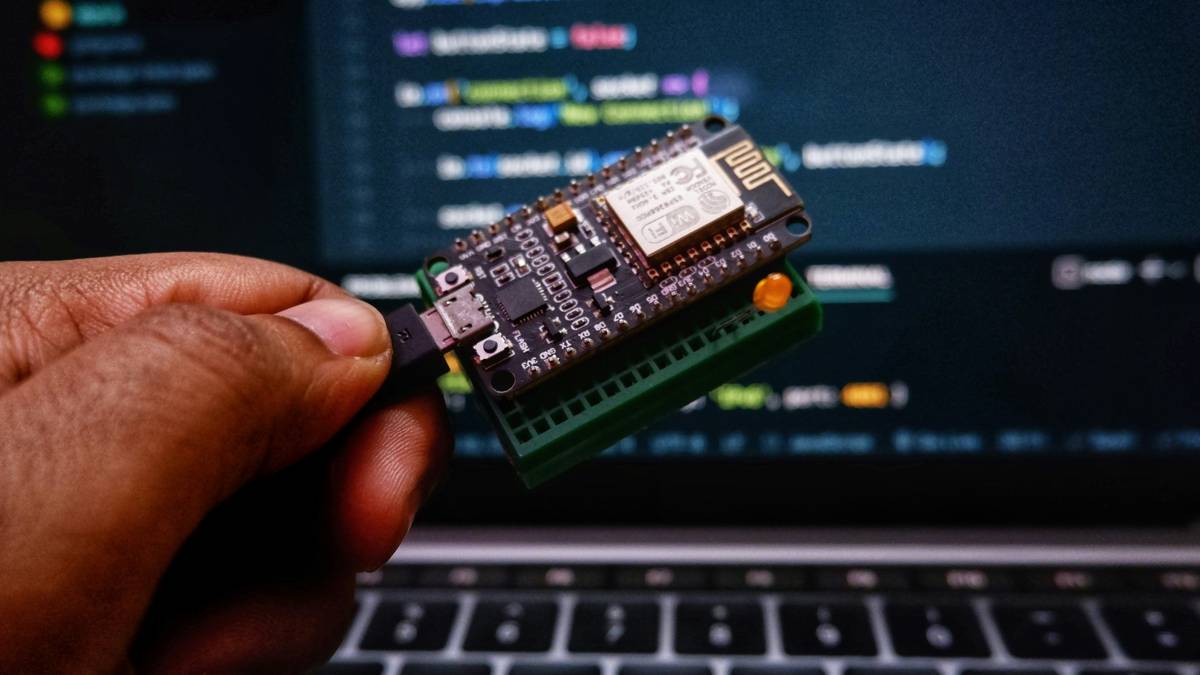
TensorFlow Lite Micro or PyTorch Mobile are starting points—but for ESP32 or Raspberry Pi-class devices, model size must stay under 500KB. Strip attention layers. Quantize aggressively. And never use floating-point arithmetic if fixed-point meets accuracy thresholds.
Orchestrate Secure Local Training Rounds
Each device trains locally on its own data stream—never sharing raw inputs. Only encrypted model deltas (weights + gradients) get transmitted during sync windows. Use TLS 1.3 with mutual certificate authentication. Rotate keys per round.
Aggregate Updates at the Edge Gateway
A local gateway—not the cloud—acts as the aggregator. This cuts latency, reduces egress costs, and keeps sensitive patterns geographically contained. The gateway computes the global model via FedAvg or FedProx, then pushes updates back over MQTT.
| Approach | Bandwidth Use | Privacy Level | Hardware Overhead | Retrain Latency |
|---|---|---|---|---|
| Cloud-Centric ML | High (raw data upload) | Low | Minimal on device | Days to weeks |
| Federated Learning in IoT | Low (model deltas only) | High (data never leaves device) | Moderate (requires local inference + training) | Hours |
| On-Device Only (No Sync) | None | Very High | Heavy (no knowledge transfer) | N/A (static after deployment) |
The Industry Secret: Federated Learning Isn’t About AI—It’s About Trust
Most engineers treat federated learning as a technical optimization. They’re missing the point. The real value isn’t computational—it’s contractual. When you prove data never leaves a user’s premises, you bypass entire layers of compliance friction. One industrial client slashed their GDPR audit prep time by 70% simply by switching to federated protocols. Another won a municipal smart-city tender because their bid explicitly guaranteed “zero raw data extraction.” In regulated environments, federated learning in IoT isn’t just smarter engineering—it’s a license to operate.
FAQ
Can federated learning work on low-power IoT devices like ESP32?
Yes—if models are quantized below 300KB and training runs only during idle cycles. Avoid backpropagation; use gradient-free updates like zeroth-order optimization.
Does federated learning eliminate all privacy risks?
No. Model inversion attacks can still infer raw data from weight updates. Always add differential privacy noise during local training.
How often should devices sync model updates?
Depends on data volatility. For home sensors: every 6–12 hours. For industrial vibration monitors: every 30 minutes during active shifts.