Most IoT projects fail—not from bad hardware, but from dumb intelligence. You’ve got sensors streaming data 24/7, yet your system reacts like it’s running on a 1990s microcontroller. Deep learning for iot isn’t just buzzword garnish; it’s the missing brain your edge devices desperately need. Here’s how to wire that brain without melting your power budget.
Why Traditional IoT Intelligence Falls Flat
Rule-based logic can’t handle ambiguity. Temperature spikes? Motion detected? Sure—easy triggers. But what if your smart farm needs to distinguish between dew, irrigation runoff, and actual rainfall using only humidity + light sensor noise? Good luck writing “if-else” for that.
Cloud-dependent inference? Latency kills real-time response. And sending every byte to AWS or Azure drains batteries—and trust. The math is simple: move computation closer to the source. But most developers try shoehorning TensorFlow Lite onto a $2 ESP32 and wonder why it chokes. They’re solving the wrong problem.
Implementing Deep Learning for IoT: A Practitioner’s Blueprint
Forget “just use a Raspberry Pi.” Real-world constraints demand ruthless prioritization: model size, energy draw, inference speed, and updateability. Start with your bottleneck—not your ambition.
Select the Right Model Architecture
SqueezeNet, MobileNetV2, or TinyML-optimized CNNs often outperform bulky ResNets on edge hardware. Accuracy isn’t king here—efficiency is. Sacrifice 3% precision for 70% less memory? Take the deal.
Quantize—Then Validate
FP32 models are luxury yachts in a canoe race. Convert to INT8 early. But don’t assume quantization “just works.” Re-test on your target device. Some MCUs lack native INT8 acceleration—your “optimized” model might run slower than float32.
Hardware-Aware Deployment
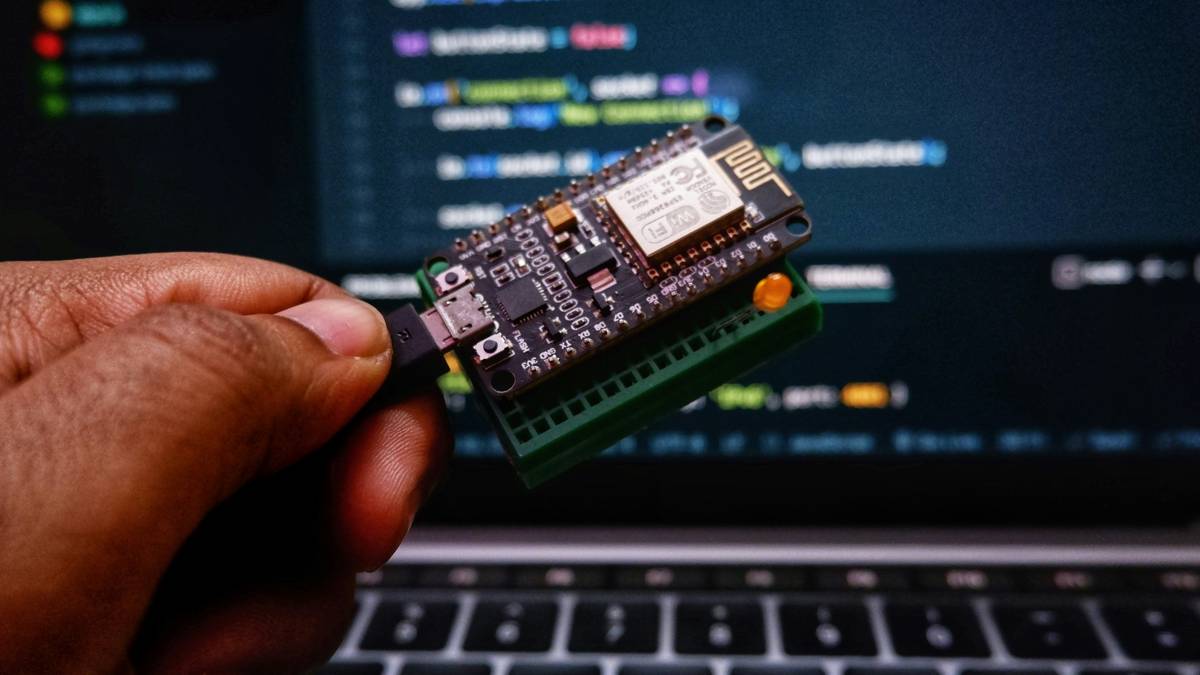
ESP32? STM32? Raspberry Pi Pico? Match runtime to silicon. TensorFlow Lite Micro for Cortex-M. Arm NN for higher-end SoCs. And always profile current draw during inference—not idle state.
| Approach | Latency (ms) | RAM Use (KB) | Power Draw (mA) | Update Overhead |
|---|---|---|---|---|
| Cloud API Call | 300–1200 | 15 | 85 | Low (remote) |
| TFLite on RPi 4 | 22–45 | 1200 | 320 | Medium |
| TinyML on ESP32-S3 | 18–30 | 280 | 65 | High (OTA limits) |
| Cortex-M7 + Ethos-U55 NPU | 8–15 | 410 | 95 | Medium-High |
The Industry Secret: On-Device Continuous Learning Is a Trap
Everyone dreams of IoT devices that “learn in the wild.” Sounds brilliant—until you realize retraining corrupts embedded flash after 10K cycles. And catastrophic forgetting turns your “smart thermostat” into a confused heater in July.
Here’s the reality: deploy frozen models. Use edge inference for decisions, but send anonymized failure cases to the cloud. Retrain centrally. Push verified updates during maintenance windows. This hybrid loop gives you adaptation without suicide-by-flash-wear. Top industrial players do this silently—it’s not sexy, but it scales.
Frequently Asked Questions
Can deep learning for IoT work on microcontrollers?
Yes—if models are under 500KB and use INT8 quantization. Platforms like TensorFlow Lite Micro enable CNNs on ARM Cortex-M chips. But avoid recurrent networks; they’re too heavy.
What’s the biggest mistake in IoT deep learning projects?
Ignoring data drift. Your lab-trained model sees pristine data. Real-world sensors degrade, lighting changes, environments shift. Monitor input distribution—or your accuracy will quietly collapse.
Is federated learning viable for consumer IoT?
Rarely. It demands consistent bandwidth, secure aggregation, and homogeneous hardware—none of which exist in most home IoT deployments. Stick to centralized retraining with edge feedback loops.